Key takeaways
- Hard courts are the most common and take the least day-to-day care.
- Cushioned acrylic systems are easier on joints than plain hard surfaces.
- Clay and artificial grass play differently and need different upkeep.
- The base under any surface decides how long the court stays flat.
Hard courts
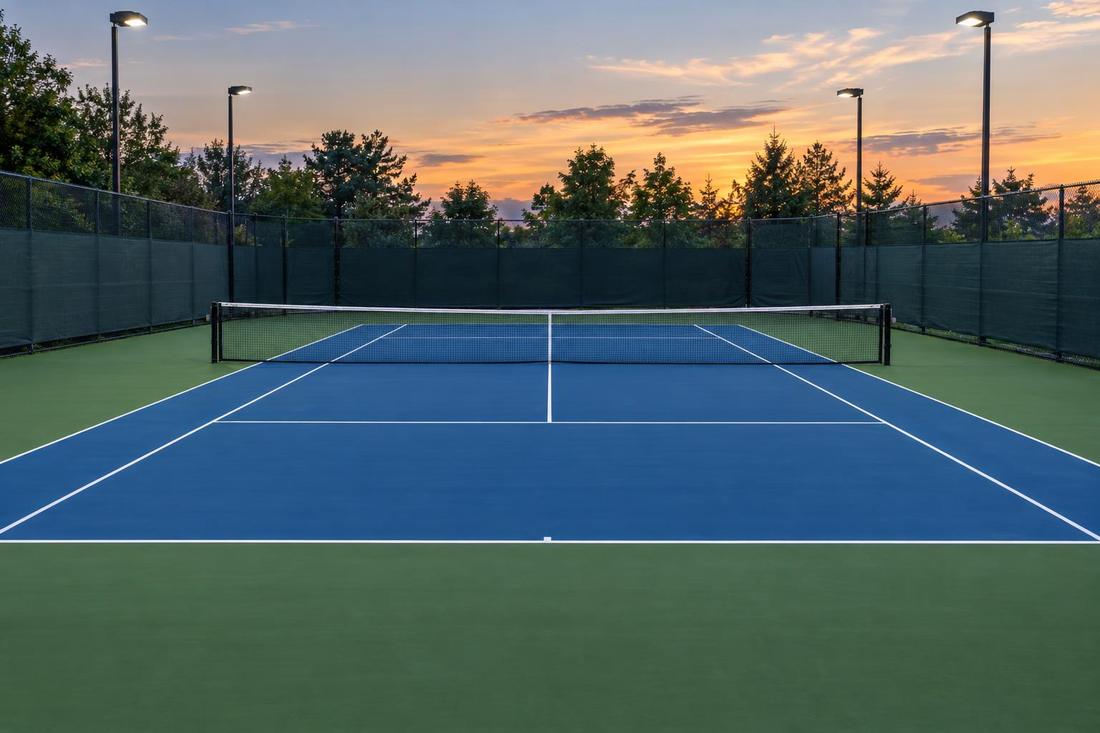
A hard court is usually acrylic coatings over asphalt or concrete. It plays true and fast and holds up to regular use. Color coats and lines can be repainted as they wear, which keeps the court looking fresh.
Cushion layers add comfort and reduce the load on knees and hips.
Clay and soft courts
Clay and similar soft courts are slower and kinder to legs, and they need regular watering, rolling and brushing. They suit owners who enjoy the upkeep or who have a groundskeeper. They are less common in this area.
Ask what ongoing work the surface will need before choosing it.
Artificial grass courts
Artificial grass tennis surfaces use sand or a similar infill and give a soft feel with little watering. They need brushing and occasional infill checks. Lines are woven or inlaid and stay put.
These are a good fit for families who want comfort and a green look all year.
The base matters most
Whatever the surface, the base must be firm, level and well drained. A tennis court should have a slight, even slope so water leaves the playing area. Cracks that reach the surface often start in the base.
Ask how the builder prepares the sub-grade and how long the base is left to cure before surfacing.
Official sources and further reading
- United States Tennis Association
- American Sports Builders Association
- National Recreation and Park Association
These are independent organizations. Links open in a new tab.
Quick answers
Which tennis surface lasts longest?
A well-built hard court with a sound base lasts a long time and is easy to recoat. Soft courts need steady upkeep.
Can I switch surfaces later?
Sometimes. It depends on the base. A site visit shows what is possible.