Key takeaways
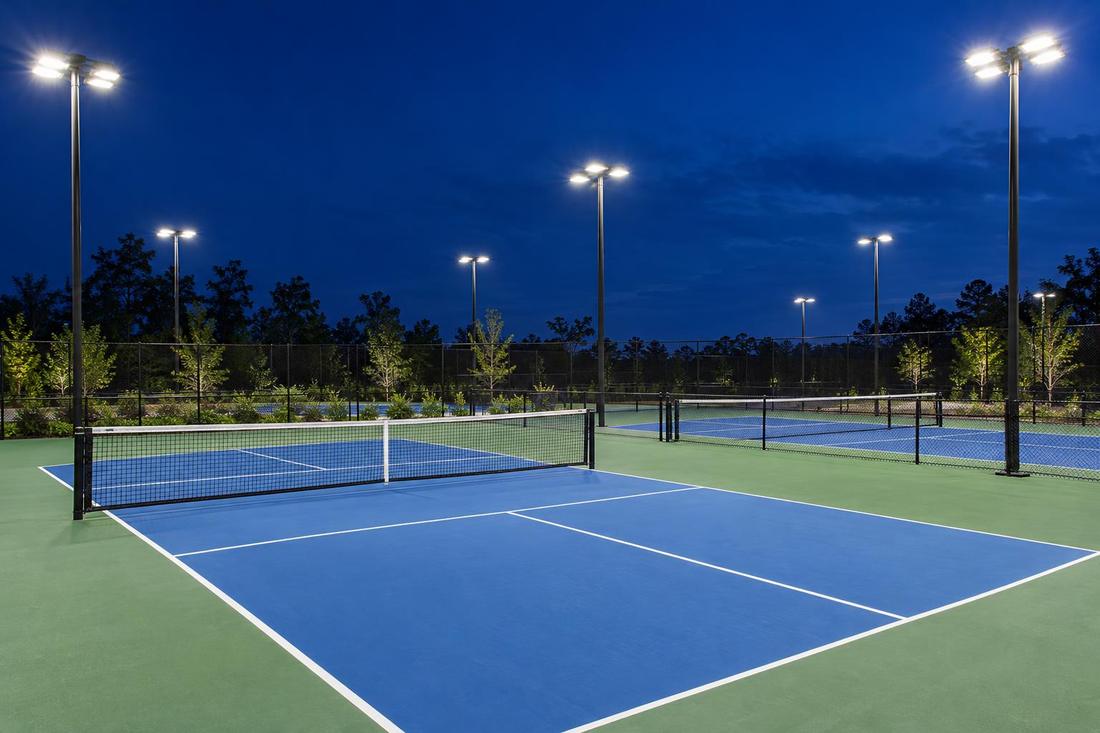
- Good lighting is even, glare-free and aimed at the playing area.
- LED fixtures use less power and switch on and off instantly.
- Pole placement and aiming prevent shadows and light spilling onto neighbors.
- Lighting often needs permits and a licensed electrician.
Why evenness matters
Players need to see the ball clearly from every position. Uneven light creates dark spots and bright patches that tire the eyes and cause mistakes. A lighting plan places poles and fixtures so the whole surface is covered the same way.
Different sports need different levels, and ball height changes the plan.
LED and control options
LED fixtures use less power, last a long time and reach full brightness right away. Timers, switches and smart controls turn lights off when play ends. They are a common choice for new installs and upgrades.
Older metal halide fixtures can often be replaced with LED.
Glare and spill light
Glare bothers players, and spill light bothers neighbors. Shields, careful aiming and the right pole height help. If homes are close to the court, a good plan reduces the light that leaves the site.
Your local rules may cover hours and light levels.
Poles, power and permits
Poles need footings sized for the load and the soil, and fixtures need power from a panel or sub-panel. Most areas require permits, and the electrical work should be done by a licensed electrician. Plan trenching and conduit early so the surface is not cut later.
Ask who coordinates the electrician and the inspection.
Official sources and further reading
These are independent organizations. Links open in a new tab.
Quick answers
Can I add lights to an existing court?
Often yes. The fence, poles and power route decide how it is done.
Will court lights bother neighbors?
Good aiming and shielding reduce spill. Check local rules and talk to neighbors early.