Key takeaways
- Most surface problems start in the base or with water.
- A court needs a slight, even slope so water leaves the playing area.
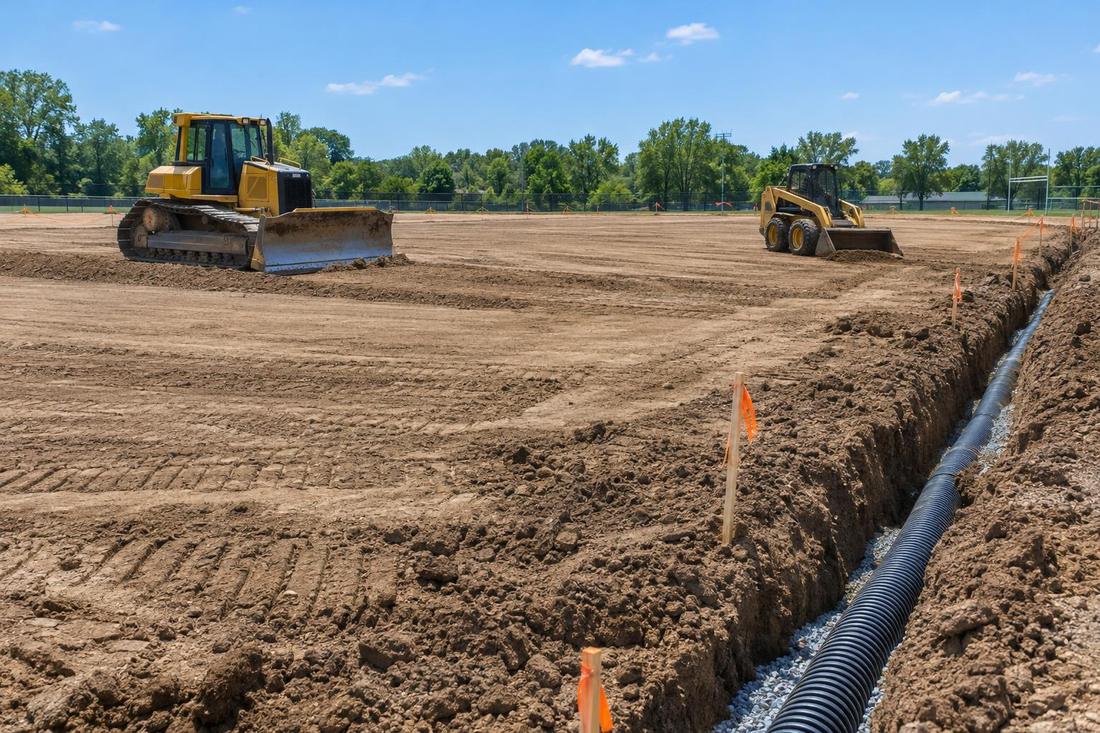
- Stone layers, geotextile and drains keep the base firm after heavy rain.
- Ask for the base depth, the materials and the drainage plan in writing.
What is under a court
A court is a stack of layers. Native soil is graded and compacted, then covered with geotextile and compacted stone. On top comes asphalt or concrete, or a stone layer for turf and tile, and then the surface system. Each layer has a job, and a weak layer shows up in the surface above it.
Skipping steps to save time often shortens the life of the court.
Slope and where water goes
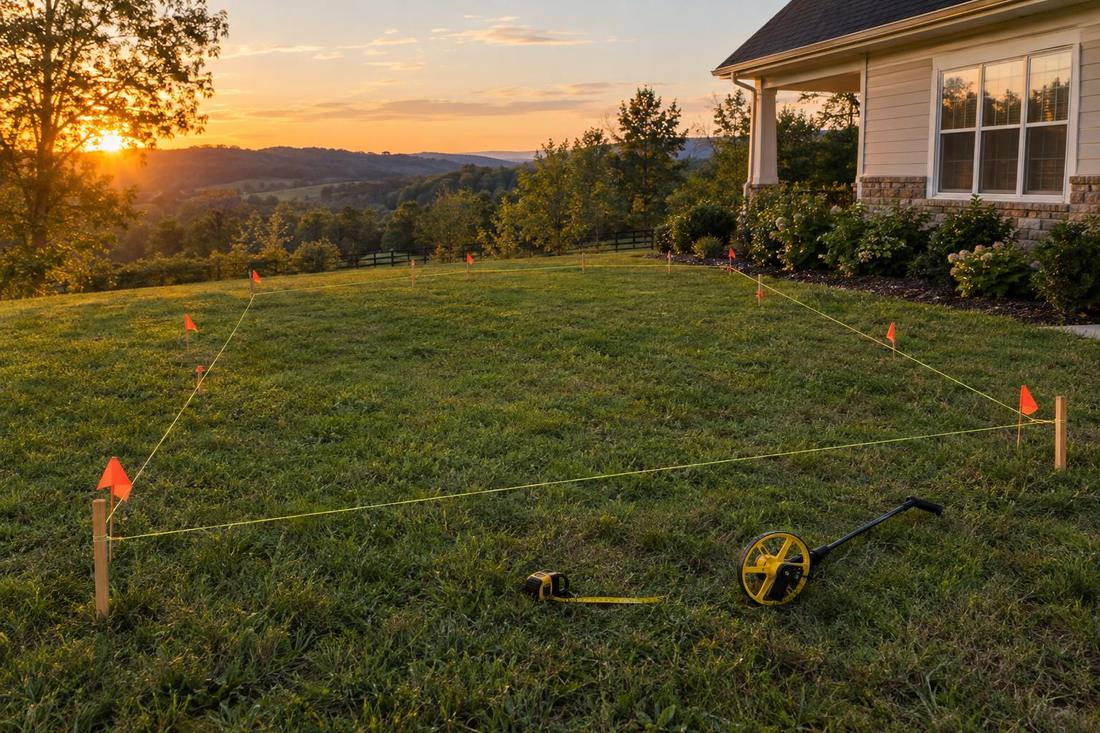
A court should shed water with a slight, even slope, roughly an inch of fall over ten feet or less. The water needs somewhere to go, such as a swale, a drain or a low area away from buildings. Ponding on a court is a sign the grading is wrong.
Hillside sites may also need retaining walls or interceptor drains.
Soil, trees and roots
Clay soil holds water and swells, sandy soil drains but may need stabilizing, and tree roots can lift a slab. A good plan deals with all three. Removing a tree near a court is sometimes the right call.
Ask about soil testing on larger projects.
Curing and timing
Asphalt and concrete bases need time to cure before color coats go on. Rushing the surface traps moisture and leads to bubbles and peeling. Weather matters too, since coatings need dry, mild days.
Your builder should tell you how long each stage needs.
Official sources and further reading
- American Sports Builders Association
- Tennessee Department of Environment and Conservation
- Tennessee 811
These are independent organizations. Links open in a new tab.
Quick answers
Why do some courts crack?
Common causes are weak bases, poor drainage, tree roots and ground movement. Sound base work reduces the risk.
Do turf fields need drainage too?
Yes. A drained stone base lets turf shed water quickly and stay playable.