Key takeaways
- Acrylic coatings suit most outdoor hard courts and are easy to renew.
- Modular tile installs quickly and drains well.
- Poured rubber is soft and suits play areas, tracks and fitness spaces.
- The best surface is the one that suits the sport, the site and the upkeep you want.
Acrylic coatings
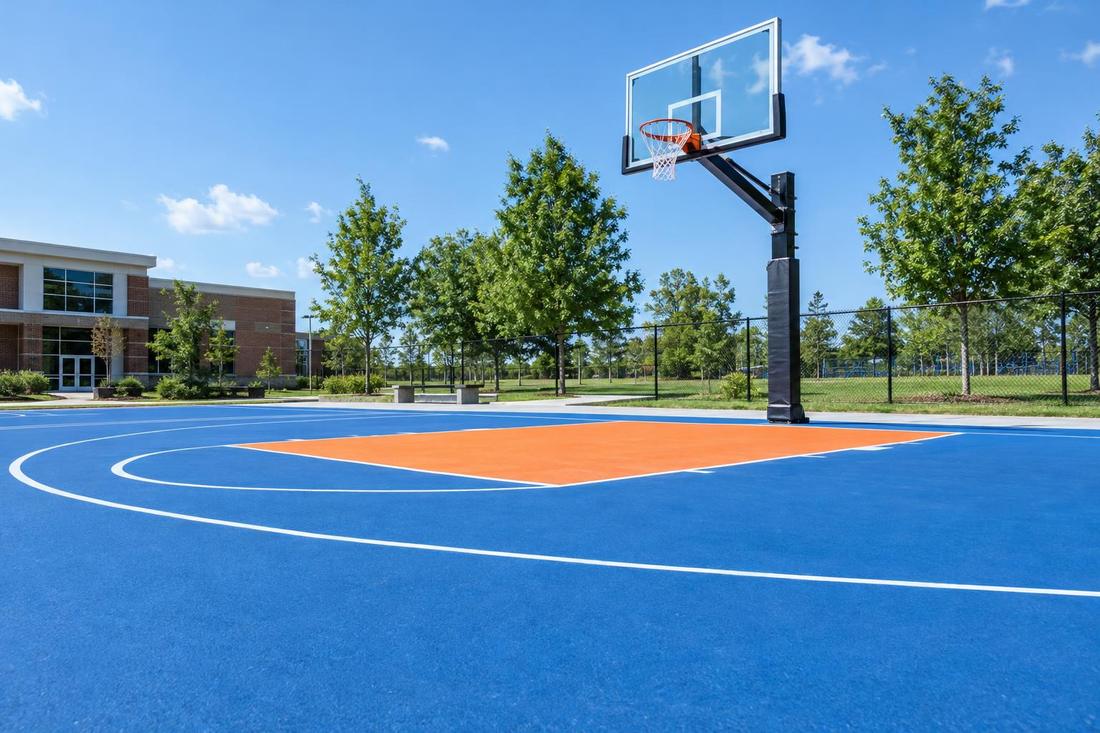
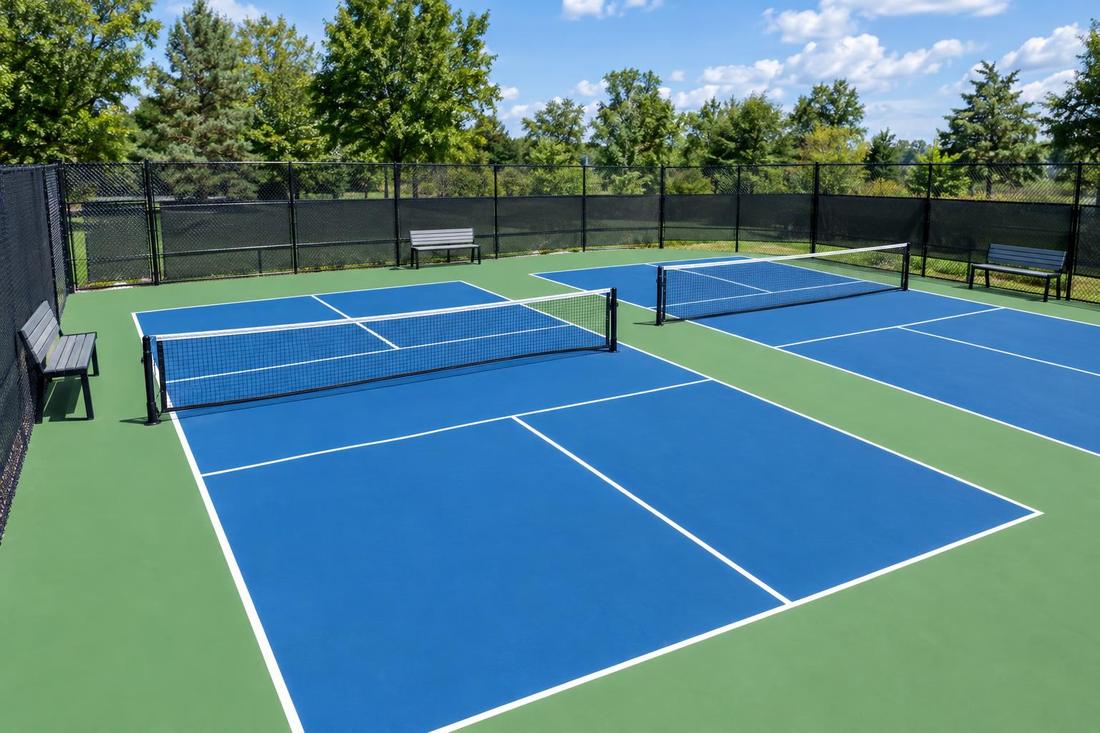
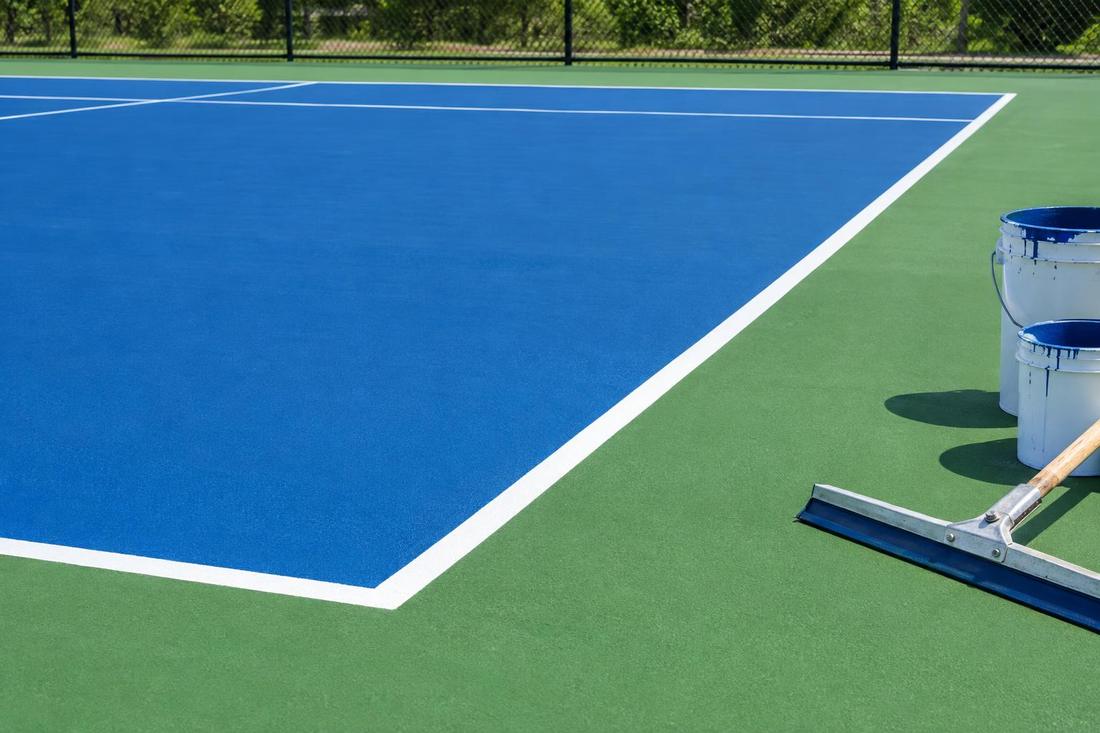
Acrylic systems are layers of filler and color applied over asphalt or concrete. They are the standard for tennis, pickleball and multi-sport hard courts. They can be recolored and re-lined as they wear.
Cushion layers make the court softer underfoot.
Modular sport tile
Interlocking tiles snap together over a flat base and drain through their openings. They install quickly and suit backyards and indoor-outdoor spaces. Tile can be lifted and relaid, which helps if the site changes.
They need a flat, firm base, and the tile edges should be checked from time to time.
Poured and rubber surfaces
Poured rubber and rubber tile give a soft landing and a non-slip texture. They fit tracks, play areas, fitness zones and some courts. Color options are wide and the surface is comfortable to walk and run on.
Installers need dry weather and careful mixing to get a clean, even finish.
Match the surface to the use
Consider the sport, the age of the players, the climate and who will maintain it. Heavy ball sports favor consistent bounce, while play areas favor cushioning. Ask for a sample and a look at a finished project.
Your builder should explain how each option will age.
Official sources and further reading
- American Sports Builders Association
- U.S. Consumer Product Safety Commission playground safety
- National Recreation and Park Association
These are independent organizations. Links open in a new tab.
Quick answers
Which surface is easiest to maintain?
Sealed acrylic and modular tile are both simple to keep clean. Regular sweeping and occasional washing go a long way.
Can surfaces be mixed on one site?
Yes. A site might use acrylic for courts, rubber for a track and turf for training.